The story
Home of the Bueso family since 1568
Four and a half centuries in one house
The Bueso lineage (1568 – today)
The story begins with the War of the Alpujarras (1568–1571) — the Morisco rebellion against the Spanish Crown. After the war, Mateo Bueso established himself in the region as a war accountant and judge overseeing the tahas of Ugíjar and Jubiles.
The Bueso family grew in prominence. In 1696 they were granted a carta ejecutoria de hidalguía — a royal charter recognising their noble status. The family later merged with the Mérida family by marriage, uniting major estates under Luis Bataller de Mérida y Mérida.
The family coat of arms features castles, lions, eagles, and inquisitorial insignia.
Magistrates in the New World
The Bataller branch produced notable judges beyond Spain:
- Miguel Antonio Bataller y Vasco — judge and oidor of the audiences of Mexico and Guatemala
- Miguel Antonio Bataller y Ros (his son) — also judge and oidor in the colonies
Doña Concepción and Senator José Bueso
Doña Concepción Bueso Bataller moved into the house in 1881. The house takes her name.
Her brother, José Bueso Bataller, was one of the most prominent figures in Granada's provincial politics:
- Provincial Deputy (1882–1904) — more than two decades representing multiple districts
- President of the Provincial Council of Granada (1896)
- Senator for Granada (1905–1907) — in the Spanish Senate
- Leading attorney in the region
- Largest rural taxpayer in Ugíjar
The manor house
The house dates from the 17th and 18th centuries:
Exterior:
- Rectangular floor plan, two stories
- Three-sloped roof (teja árabe)
- Three-story tower on the right side
- Ornamental wrought-iron grilles with decorative ejected busts
Interior:
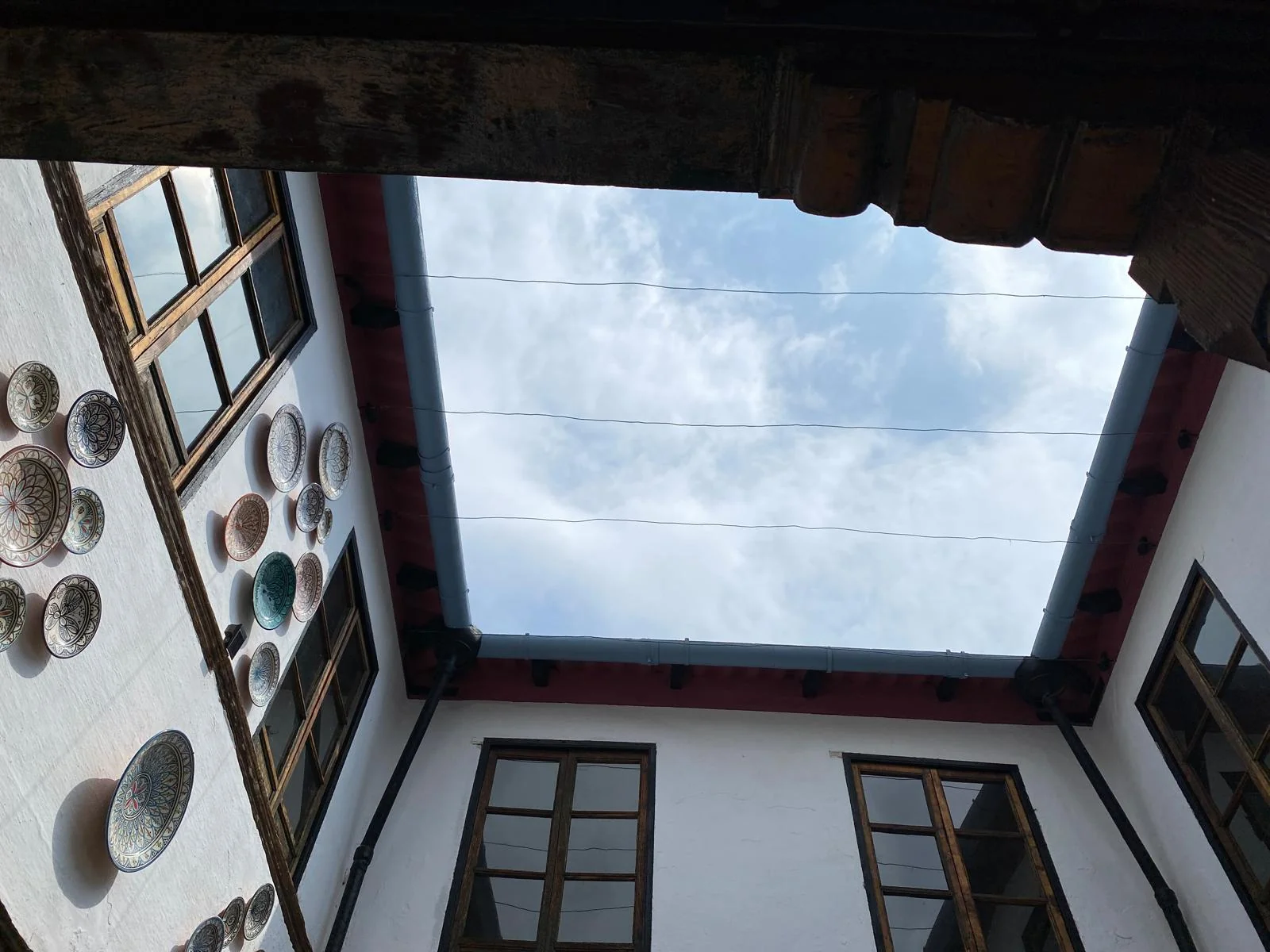
- Central courtyard reached through a foyer with Tuscan columns
- Wooden beams and zapatas
- Original bread oven
- Barrel-vaulted cellar
The house is listed in the Centro de Patrimonio Cultural de la Alpujarra among the ten historically significant manor houses of Ugíjar. The Panteón de los Bueso Bataller y Mérida in the village cemetery is listed separately as heritage.
Ugíjar, capital of the Alpujarras
Ugíjar served as capital of the Nazarí taha under Moorish rule and received city status in 1493 under Boabdil. The Collegiate Church of the Virgin of Martyrdom is the only Gothic-Mudéjar Levantine temple left in the Alpujarras. Pope Benedict XVI granted it a jubilee year in 2006.
Today Ugíjar preserves 18th-century hermitages, the former Franciscan convent of 1646, the two surviving towers of the silk factory, the Fuente del Arca (1785), and Calle Adelante with its medieval Moorish architecture. Every October the ExpoAlpujarra brings 30,000–50,000 visitors.